
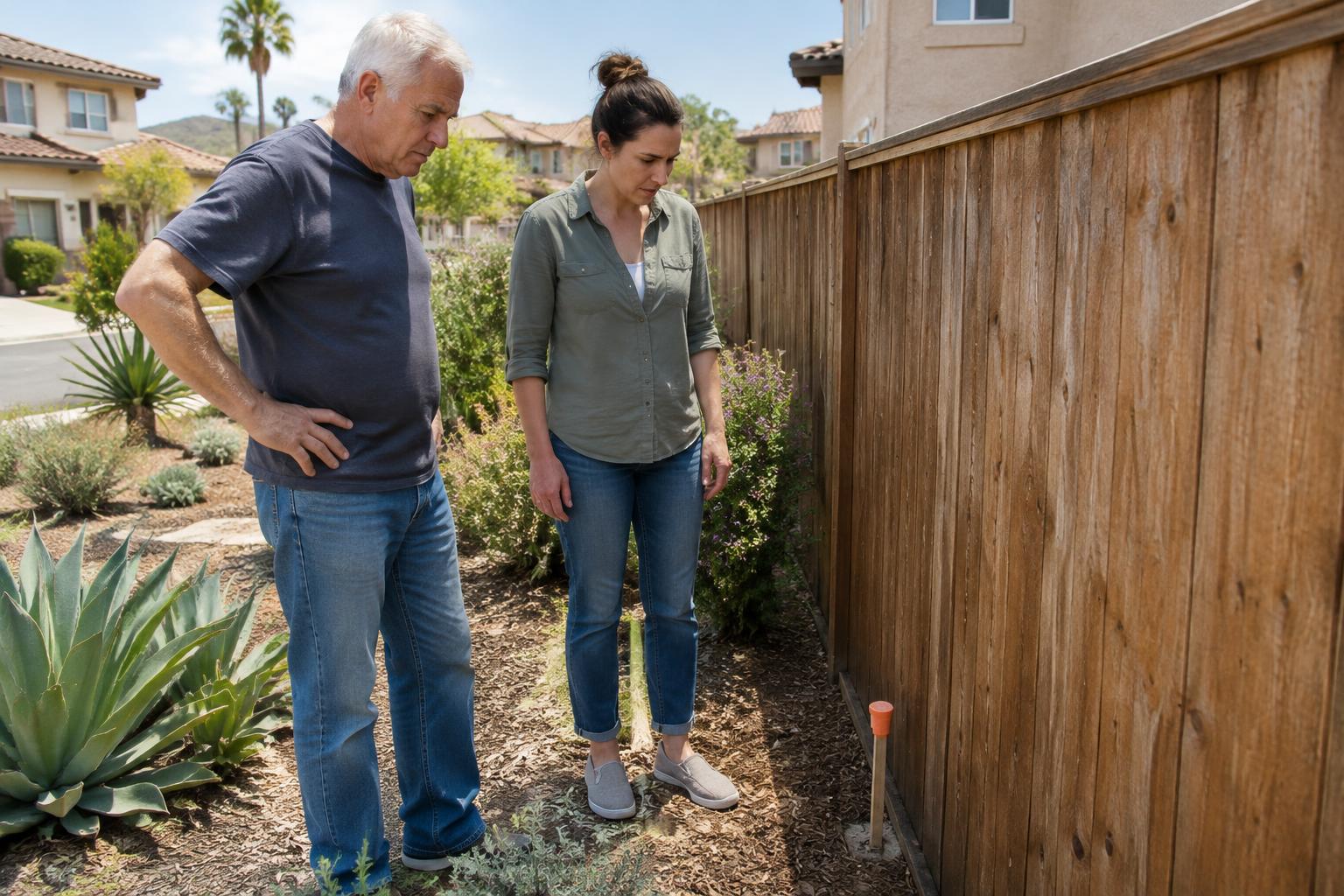
When Neighbors Disagree About Property Lines
Fence line disputes may arise when a property owner discovers that a fence, wall, driveway, landscaping feature, or other improvement extends across a recorded property boundary. Sometimes the disagreement begins during a sale, renovation, or new construction project. Other disputes arise after neighboring owners obtain conflicting surveys or interpret property records differently.
Common issues include:
Fences Built Across Property Lines
A fence may be located partly or entirely on neighboring property. Resolving the disagreement can require examining surveys, deeds, historical property use, and the legal rights of the affected owners.
Conflicting Surveys and Boundary Records
Property owners may disagree about survey markers, recorded descriptions, or the location of the legal boundary. A professional survey can provide important evidence, although a survey does not necessarily resolve every competing legal claim.
Encroachments and Unauthorized Improvements
Walls, retaining structures, driveways, fences, and other improvements may extend onto adjoining land, raising questions about property rights and available remedies.
Longstanding Fence Locations
An older fence does not necessarily establish the legal boundary. Depending on the facts, the history of the properties and applicable legal doctrines may become important.
Does My Neighbor Have to Pay Half the Cost of a Shared Fence?
California Civil Code § 841 addresses certain responsibilities between adjoining landowners concerning shared boundary fences.
The law generally presumes that adjoining landowners benefit equally from a fence dividing their properties and share responsibility for reasonable construction, maintenance, or necessary replacement costs, unless a written agreement provides otherwise.
However, equal cost sharing is not automatic in every dispute. The presumption may be overcome when evidence demonstrates that an equal allocation would be unjust. Courts may consider the benefit to each owner, financial hardship, whether proposed costs are excessive, and other relevant circumstances.
The statute also requires a landowner intending to incur covered fence costs to provide affected adjoining landowners with 30 days' prior written notice. That notice must include information about the fence problem, proposed work, estimated costs, proposed allocation of expenses, anticipated timeline, and the statutory presumption of shared responsibility.
Important distinction: A disagreement over who must pay for a shared fence is different from a dispute over where the legal property boundary is located. Different facts and legal considerations may apply.
Lepera & Associates can evaluate fence-related disputes in the context of the parties' property rights, agreements, and applicable California law.
What if My Neighbor Claims the Right to Use My Property?
Property disputes are not always about ownership of the land itself. They may involve claims that someone has a legal right to cross or use another person's property.
Common examples include shared driveways, access roads, utility easements, and disagreements over the scope or location of recorded easements.
Determining the parties' rights may require reviewing deeds, recorded easement documents, historical property use, and other evidence. The appropriate legal response depends on the nature of the claimed right and the circumstances of the dispute.
When a Boundary Disagreement Becomes an Ownership Dispute
Some boundary disputes involve competing claims to ownership or interests in real property.
A quiet title action is a legal proceeding that may be used to determine adverse claims to property or an interest in property. Whether this remedy is appropriate depends on the particular ownership dispute and applicable California law.
Other disputes may raise questions involving historical use, adverse possession, or conflicting recorded interests. These issues require careful legal analysis and should not be treated as automatically establishing ownership rights.
Resolving Property Disagreements Before They Escalate
A property dispute can affect a homeowner's ability to use, improve, sell, or enjoy real estate. In some cases, reviewing property documents, obtaining a survey, and negotiating with the neighboring owner may help resolve the disagreement.
Other cases involve competing legal claims or circumstances that require court intervention.
Lepera & Associates handles fence line disputes and related real estate litigation, including property boundary, easement, and ownership conflicts. The appropriate strategy depends on the property records, the parties' legal rights, and the specific facts of the dispute. This work is part of our broader Real Estate Litigation practice.
Frequently Asked Questions
Can I make my neighbor move a fence that crosses my property line?
Possibly. The available remedies depend on the legal boundary, the circumstances surrounding the fence, and any competing property rights. Surveys, deeds, and other evidence may be important in evaluating the dispute.
Does California law require neighbors to split the cost of a fence?
California Civil Code § 841 generally presumes equal responsibility for reasonable costs associated with a shared boundary fence, unless a written agreement provides otherwise. The presumption may be rebutted when equal cost sharing would be unjust.
Do I need to notify my neighbor before replacing a shared fence?
California Civil Code § 841 requires 30 days' prior written notice when a landowner intends to incur costs for a covered shared boundary fence. The notice must contain specific information about the proposed work and costs. Other legal or contractual requirements may also apply.
What if my survey shows that my neighbor's fence is on my land?
A survey may provide important evidence about the recorded boundary, but it does not necessarily resolve every legal question. The parties' property documents, historical use, and competing claims may also need examination.
Can a fence that has been in place for many years become the legal property boundary?
Not automatically. Longstanding fence placement may be relevant to certain legal claims, but the outcome depends on the facts and the requirements of applicable California law.
What is the difference between a boundary dispute and an easement dispute?
A boundary dispute concerns where property lines are located or who holds rights in disputed land. An easement dispute generally concerns a claimed right to use another person's property for a particular purpose.