
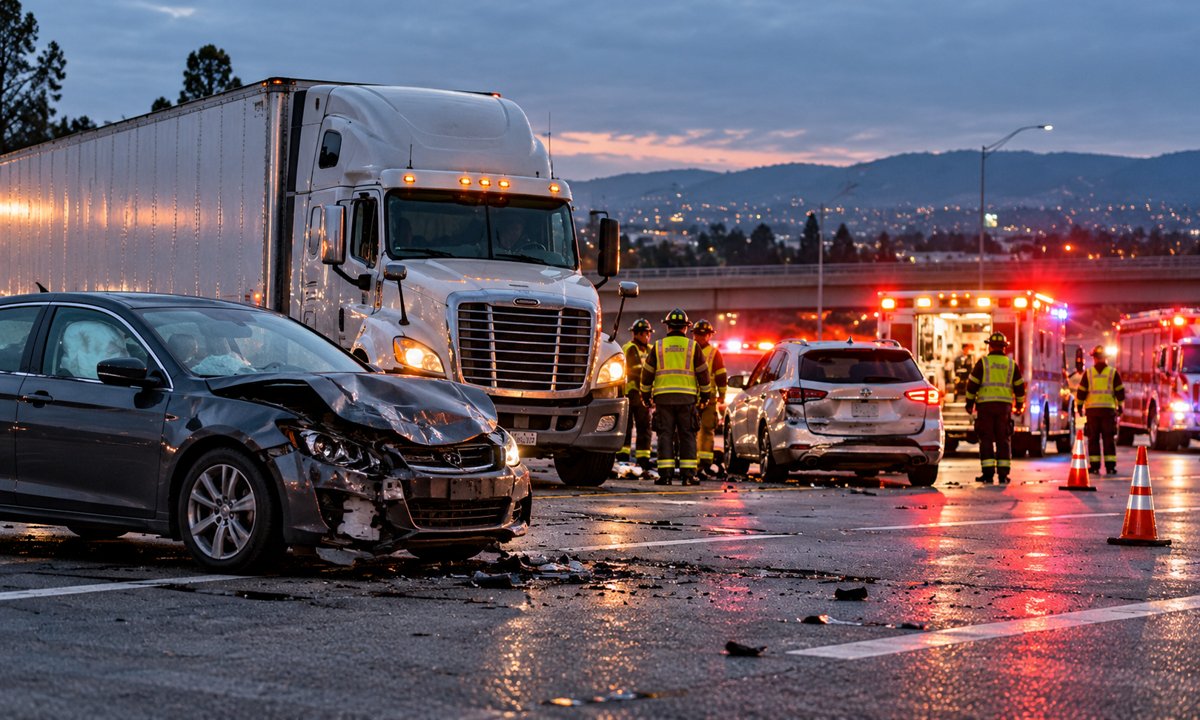
What Types of Motor Vehicle Collisions Can Lead to Injury Claims?
Motor vehicle accidents can involve different types of vehicles, roadway conditions, and potentially responsible parties. The legal issues often depend on how the collision occurred and the conduct of those involved.
Common circumstances include:
- Passenger vehicle collisions: Rear-end, intersection, head-on, sideswipe, and other crashes involving cars, SUVs, and passenger vehicles.
- Commercial truck accidents: Collisions involving tractor-trailers, delivery trucks, and other commercial vehicles, sometimes raising questions about trucking-company responsibility, driver qualifications, maintenance, or cargo handling.
- Motorcycle accidents: Collisions that may cause serious injuries and involve disputed questions concerning visibility, right-of-way, lane positioning, or other driving conduct.
- Rideshare and transportation-service accidents: Collisions involving Uber, Lyft, or other transportation services, potentially raising additional insurance and responsibility questions.
- Pedestrian and bicycle collisions: Incidents involving motor vehicles and vulnerable roadway users, including disputes concerning crosswalks, intersections, safe passing, and right-of-way.
- Multiple-vehicle collisions: Accidents involving several vehicles, potentially requiring a detailed reconstruction of events and evaluation of multiple parties' conduct.
An injury claim depends on the circumstances of the accident, applicable law, and available evidence—not simply the type of vehicle involved.
Who Is Responsible When a Motor Vehicle Accident Occurs?
Determining responsibility often requires examining the conduct of drivers and other potentially involved parties.
Relevant factors may include distracted driving, excessive speed, failure to yield, unsafe lane changes, impaired driving, or failure to adjust driving behavior to traffic and road conditions.
Evidence such as photographs, witness statements, traffic-camera footage, vehicle damage, collision reports, and electronic vehicle data may help establish how the accident occurred.
California follows a comparative-fault system. An injured person may still be able to recover damages even when they share responsibility for an accident, although their recovery may be reduced according to their percentage of fault.
In some cases, responsibility extends beyond the individual driver. Depending on the facts and applicable law, an employer, vehicle owner, maintenance provider, or another party may also be legally responsible.
Why Can Commercial Truck Accident Claims Be More Complex?
Accidents involving commercial trucks may present legal and factual issues beyond those encountered in an ordinary passenger-vehicle collision.
A collision involving a tractor-trailer or other commercial vehicle may require examination of driver conduct, hours-of-service records, inspection and maintenance documentation, cargo loading, vehicle condition, and applicable safety requirements.
Potentially responsible parties may include a truck driver, trucking company, vehicle owner, or another business involved in operating or maintaining the vehicle. Responsibility depends on the facts and relevant legal relationships.
Commercial truck cases may also involve multiple insurance policies, substantial property damage, and disputed evidence concerning how the collision occurred.
Relevant records may be controlled by trucking companies or other parties. Prompt identification and preservation of evidence can therefore be important when evaluating a potential claim.
What Legal Issues Arise After a Motorcycle Collision?
Motorcyclists face particular risks because motorcycles provide less physical protection than enclosed passenger vehicles. A collision may result in serious orthopedic injuries, traumatic brain injuries, spinal injuries, or other lasting harm.
Disputes may involve whether another driver failed to see the motorcycle, violated the rider's right-of-way, made an unsafe turn, or changed lanes without adequate observation.
California permits motorcycle lane splitting under applicable law. Whether a rider's conduct was reasonable and legally relevant depends on the circumstances, including traffic conditions, speed, and other evidence.
Motorcycle injury claims should be evaluated on the actual facts rather than assumptions about how motorcyclists ride.
Medical documentation, witness testimony, roadway evidence, and accident reconstruction may be relevant to determining liability and damages.
What Happens When Insurance Coverage Is Disputed or Insufficient?
Insurance issues can complicate motor vehicle accident claims, particularly when responsibility is disputed or the available coverage may be insufficient to address the injured person's losses.
Questions may arise concerning the responsible driver's liability insurance, policy limits, exclusions, and the extent of covered damages.
If an at-fault driver has no insurance or insufficient insurance, uninsured or underinsured motorist coverage may provide another potential source of recovery, depending on the injured person's policy and the circumstances.
Collisions involving commercial vehicles or rideshare services may involve additional insurance arrangements and questions about which coverage applies.
An insurer's assessment of fault or damages does not necessarily resolve the underlying legal issues. Policy language, available evidence, and California law may affect the outcome of a coverage or compensation dispute.
How Are Injuries and Financial Losses Evaluated After a Collision?
Motor vehicle accidents can cause injuries ranging from temporary conditions to permanent impairments. The extent of an injury and its consequences may not be fully apparent immediately after the collision.
Medical records, diagnostic testing, treatment history, rehabilitation recommendations, and evidence of continuing limitations can help document the effects of an accident.
Depending on the circumstances, recoverable damages may include:
- Past and future medical expenses
- Rehabilitation and related treatment costs
- Lost earnings
- Diminished future earning capacity
- Property damage and other qualifying financial losses
- Physical pain, emotional suffering, and loss of enjoyment of life
The availability and amount of damages depend on the evidence, applicable legal standards, and the circumstances of the claim.
Accident-related evidence may also include photographs of the vehicles and roadway, repair records, witness information, electronic data, and documentation of expenses.
Preserving relevant information can become particularly important when liability, causation, or the extent of the claimed losses is disputed.
Understanding Your Legal Options After a Motor Vehicle Accident
Motor vehicle accident claims may involve disputed liability, conflicting accounts of the collision, insurance coverage questions, and disagreements about the extent of an injured person's losses.
Resolving a claim may require investigating the accident, identifying potentially responsible parties, reviewing medical and financial evidence, negotiating with insurers, or pursuing litigation when appropriate.
Lepera & Associates, PC assists clients in evaluating motor vehicle accident claims and pursuing available legal remedies under California law.
The appropriate course of action depends on the circumstances, the available evidence, applicable deadlines, and the legal issues presented by the particular matter.